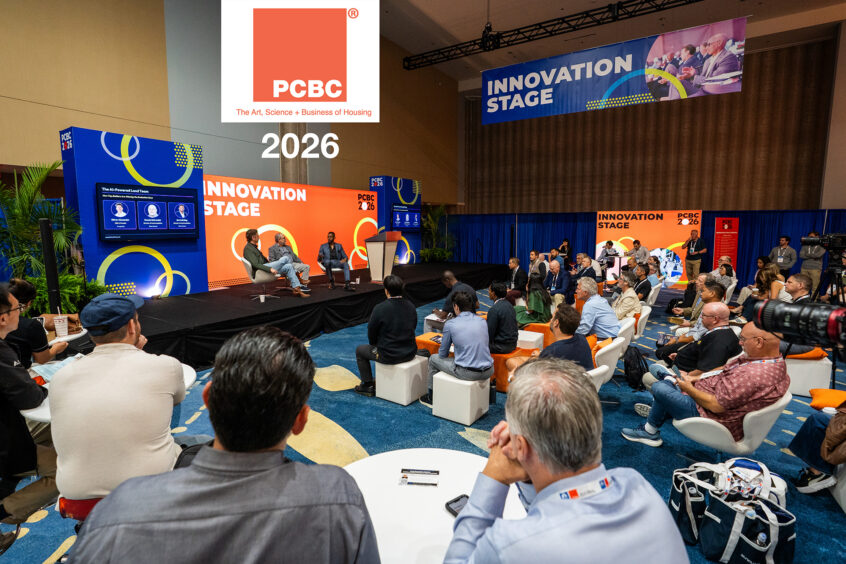
Abbott | Reed Vice President Aaryn Abbott attended PCBC 2026 and shares his key takeaways.
Attending this year’s PCBC Land & Capital Education Track reinforced a theme that surfaced throughout nearly every session: our industry’s biggest challenge isn’t identifying solutions anymore—it’s executing them more effectively.
Whether the discussion centered on the economy, housing, policy, or technology, the common thread was finding ways to remove friction and create greater predictability across the development process. Here are a few of my biggest takeaways:
The economy is more resilient than public sentiment suggests. Chris Thornberg challenged many of the headlines dominating today’s news cycle, pointing to strong underlying economic fundamentals. Rather than predicting an imminent recession, he emphasized that the larger long-term concern is persistent federal deficit spending and the fiscal imbalances it creates.
Housing remains a supply challenge—but not everywhere equally. Danielle Hale highlighted that the structural housing shortage persists, but future production should prioritize markets where jobs, housing, and quality of life are better aligned. Inventory is gradually improving, not because we’ve solved the supply shortage, but because homes are spending more time on the market and the COVID-era “lock-in effect” is slowly easing as life events increasingly outweigh historically low mortgage rates.
Predictability matters just as much as speed. CBIA introduced its campaign supporting Proposition 45, which seeks to preserve CEQA while reducing unnecessary litigation delays and creating more predictable timelines for housing, infrastructure, and other public-benefit projects. For an industry facing significant housing demand, improving certainty throughout the entitlement process could be just as valuable as shortening it.
Construction technology is entering a new phase. Software providers are moving beyond basic integrations toward genuine interoperability—connecting design, estimating, procurement, manufacturing, and construction workflows instead of operating as isolated platforms. At Abbott | Reed, we’re excited to be part of that evolution through our adoption of Constructable, which is helping us connect project information and improve collaboration across our teams.
AI is only as powerful as the data behind it. One of the strongest messages from both the keynote sessions and the technology track was that artificial intelligence won’t deliver meaningful productivity gains until we solve the industry’s fragmented data flows. Connected information—not just smarter algorithms—will be the real catalyst for improving how projects are delivered. That’s another area where we’re encouraged by Constructable’s vision, as they continue collaborating closely with contractors to build solutions around the industry’s real-world workflows.
Thank you to PCBC , California Building Industry Association (CBIA) , and the many speakers who shared thoughtful perspectives on where our industry is headed. It’s encouraging to see conversations shifting beyond identifying challenges toward improving the systems, policies, and technologies that will help us deliver more housing—and deliver it better.